Dodgers Sign Kyle Tucker and Push MLB’s Spending Divide to New Extremes
The Dodgers sign Kyle Tucker to a $240M deal, widening MLB’s spending gap as Los Angeles continues to dominate the market and chase another World Series.
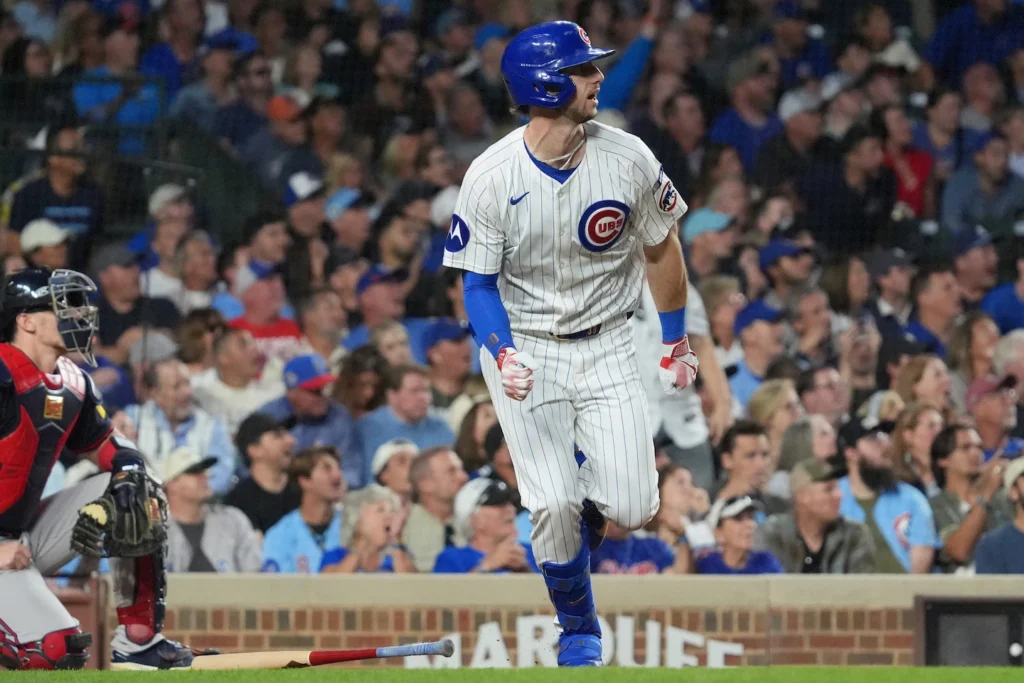
The Los Angeles Dodgers, fresh off another World Series title, entered the offseason with no urgent roster holes. Still, they went out and secured Kyle Tucker, handing the All-Star outfielder a reported four-year, $240 million contract and further widening Major League Baseball’s already yawning financial gap.
The deal, which carries an average annual value of $60 million, places Tucker alongside Shohei Ohtani, Mookie Betts, and Freddie Freeman in what has become the most star-laden roster in the sport.
A Superteam That Didn’t Need Reinforcements — and Took Them Anyway
Unlike most contenders chasing upgrades, the Dodgers weren’t acting out of necessity. Their lineup was already championship-caliber. Tucker’s arrival is not about survival — it’s about insulation.
Los Angeles has perfected a modern model of dominance: spend aggressively, absorb luxury-tax penalties without hesitation, and eliminate risk by stacking elite talent beyond what rivals can reasonably counter.
Because the Dodgers have exceeded MLB’s competitive balance tax threshold for multiple consecutive seasons, every dollar spent now is taxed at 110 percent. In real terms, Tucker’s contract could approach half a billion dollars when penalties are included.
And yet, they paid it anyway.
The New “Evil Empire” of Baseball
If the late-1990s New York Yankees were baseball’s original “Evil Empire,” the Dodgers are its modern, more polished successor — armed with deeper pockets, smarter front-office strategy, and fewer internal constraints.
Under president of baseball operations Andrew Friedman, Los Angeles has turned short-term, high-value contracts into a competitive weapon. Tucker’s openness to a shorter deal with massive annual value fit the Dodgers’ blueprint perfectly.
Reports suggest the New York Mets offered four years and $220 million. The Dodgers simply went higher — as they so often do.
Why Kyle Tucker Fits Los Angeles Perfectly
For Tucker, the Dodgers may be the ideal destination.
The 28-year-old outfielder arrives with a résumé that includes a .273 career batting average, an .865 OPS, and significant postseason experience. He has also missed time in each of the past two seasons due to injury — a factor that reportedly made some teams hesitant to commit long-term.
In Los Angeles, Tucker won’t be asked to carry a franchise. He’ll be the sixth or seventh biggest star on a roster dominated by Ohtani’s global presence. The spotlight will be shared, the pressure diffused.
Strategically, the signing also prepares the Dodgers for a future beyond Freeman, whose contract expires after the 2027 season.
The Spending Gap That Defines the Modern MLB
The numbers are staggering.
This offseason alone, the Dodgers committed more average annual salary to Tucker and closer Edwin Díaz than five MLB teams combined have committed to their entire projected 2026 payrolls.
Their projected payroll for 2026 sits around $429 million, roughly $134 million more than the Mets, who rank second. Once luxury-tax penalties are factored in, the gulf grows even wider.
The question now facing baseball isn’t whether the Dodgers are breaking rules — they aren’t. It’s whether the rest of the league will eventually change those rules to slow them down.
A Collective Bargaining Reckoning Ahead
As MLB approaches its next collective bargaining agreement, the Dodgers’ dominance is likely to sit at the center of negotiations.
The MLB Players Association will argue that other teams could spend more if they chose to. Owners, particularly in smaller markets, will insist financial realities make such spending impossible.
What’s clear is this: for now, the rules allow the Dodgers to operate exactly as they are — and they have no intention of stopping.
They didn’t need Kyle Tucker.
They bought him anyway.
And the rest of baseball is left trying to keep up.
About The Author