Kirby Smart Reflects on Costly Fourth-Down Decision in Georgia’s Sugar Bowl Loss to Ole Miss
Kirby Smart reflects on a failed fourth-down decision that shifted momentum in Georgia’s Sugar Bowl loss to Ole Miss and ended the Bulldogs’ title run.
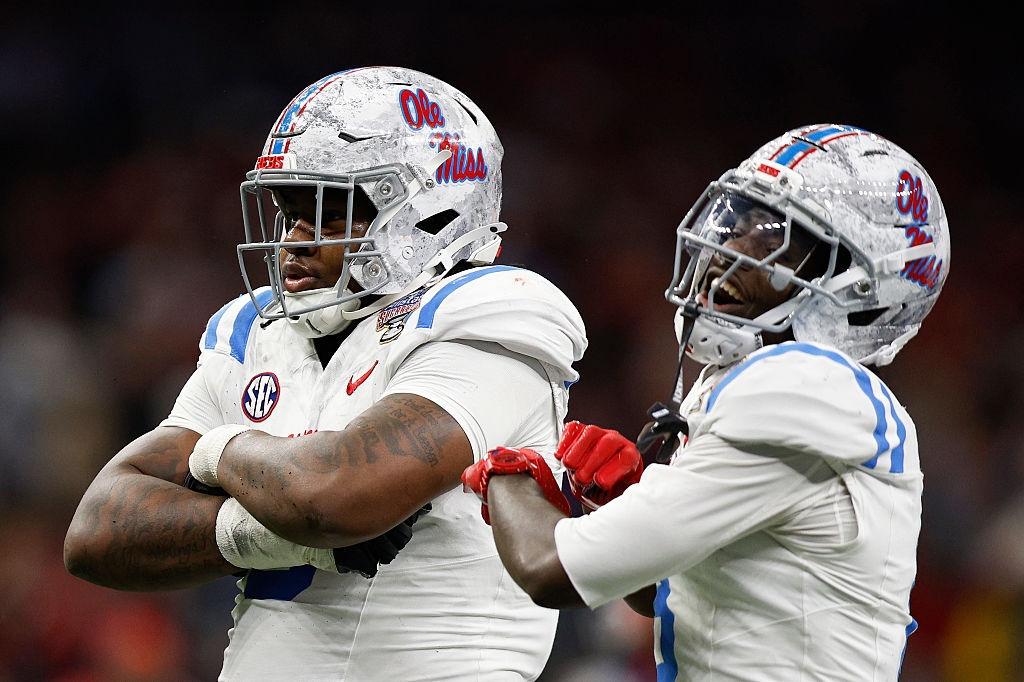
Georgia’s national title hopes came to a dramatic end in the Sugar Bowl, and while head coach Kirby Smart refused to assign blame, one critical fourth-down sequence loomed large in the Bulldogs’ 39–34 loss to Ole Miss.
The moment, Smart admitted afterward, was never supposed to unfold the way it did.
The Play That Changed the Game
Early in the fourth quarter, Georgia faced a fourth-and-2 from its own 33-yard line. The punt unit initially took the field, signaling a conventional decision. But an Ole Miss injury stoppage opened the door for reconsideration.
Smart opted to send his offense back out, intending either to draw Ole Miss offsides or accept a delay-of-game penalty before punting.
Instead, the ball was snapped.
Quarterback Gunner Stockton, caught off guard, was immediately sacked by Ole Miss linebacker Suntarine Perkins, who came unblocked off the edge. Ole Miss took possession at the Georgia 23-yard line and scored two plays later, extending its lead to 10 with just over nine minutes remaining.
“We had a misfire there,” Smart said. “The ball was not supposed to be snapped in that situation. That’s on us as coaches.”
Analytics vs. Execution
Smart revealed that Georgia’s analytics actually supported going for the fourth-down conversion. With the Bulldogs having surrendered a 10-point second-half lead, he felt momentum had shifted and the team needed a spark.
However, based on Ole Miss’ defensive alignment, the snap should never have occurred.
Ole Miss defenders, meanwhile, were unconcerned with Georgia’s internal confusion.
“I see the ball, I go,” Perkins said. “That’s my job.”
Risk-Taking Cuts Both Ways
Earlier in the game, Georgia successfully executed a fake punt, with receiver Landon Roldan throwing a 16-yard completion to tight end Lawson Luckie. That gamble resulted in points and briefly swung momentum back toward the Bulldogs.
In Smart’s view, the earlier success and later failure ultimately balanced out.
“We had one that worked, one that didn’t,” he said.
A Game Georgia Nearly Stole Back
Despite the costly mistake, Georgia showed resilience. The Bulldogs rallied to tie the game at 34–34 with under a minute remaining, only for Ole Miss quarterback Trinidad Chambliss to deliver a decisive 40-yard completion that set up the Rebels’ game-winning field goal.
Georgia’s defense surrendered 473 total yards, its second-highest total allowed all season. The loss snapped a 75-game winning streak for Georgia when leading at the start of the fourth quarter — the longest such streak in the nation.
It also marked the second consecutive season Georgia’s championship run ended at the Superdome.
Respect for the Opponent
Rather than dwelling on regrets, Smart emphasized Ole Miss’ execution and preparation.
“They made more plays than we did,” he said. “They outcoached us, outplayed us, and outexecuted us.”
He also praised the atmosphere, calling the Sugar Bowl crowd “as loud as a road game,” and acknowledged that the expanded College Football Playoff delivered exactly what it promised.
“That’s what the playoff was built for,” Smart said. “To have games like that.”
A Season That Ends on Fine Margins
Georgia’s season did not collapse due to a single play — but in championship football, moments matter. The Bulldogs were one snap away from punting the ball away and one stop away from advancing.
Instead, a split-second miscommunication became the defining image of their season’s end.

About The Author