Mets’ Trade for Luis Robert Jr. Is a Calculated, Low-Risk Gamble Steve Cohen Can Afford
The Mets’ trade for Luis Robert Jr. is a low-risk, high-upside bet Steve Cohen can afford, giving New York elite defense and potential star power.
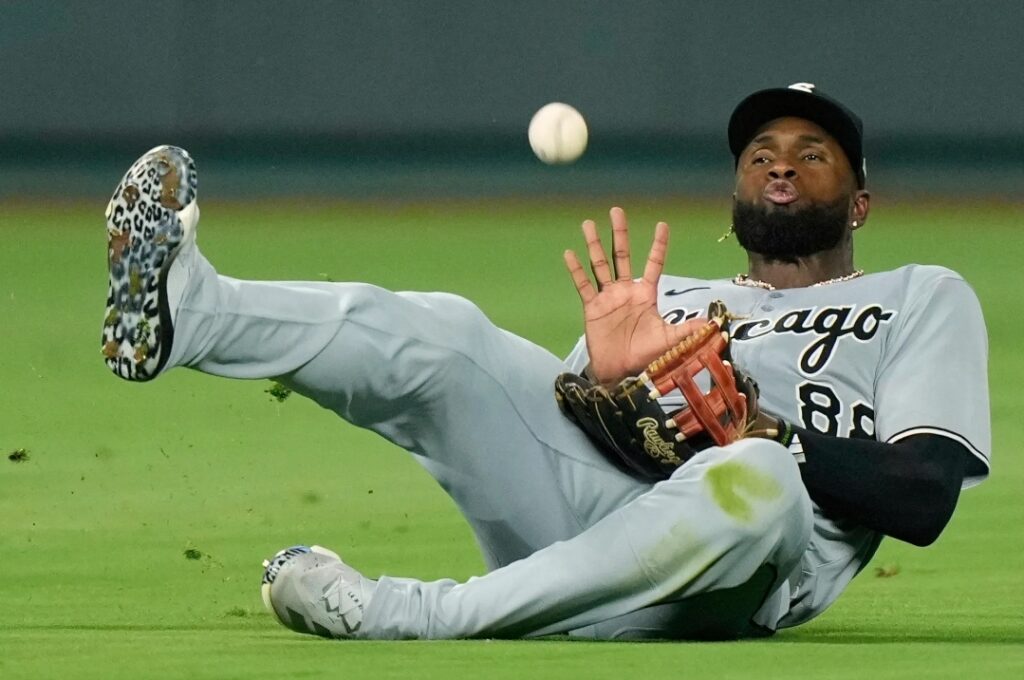
The New York Mets have taken a swing on upside—and it’s a risk few owners in baseball are better positioned to absorb than Steve Cohen.
By acquiring Luis Robert Jr. from the Chicago White Sox, the Mets are betting that a change of scenery, improved health, and a competitive environment can help unlock the star-level talent Robert has flashed before. Given the modest prospect cost and Cohen’s financial flexibility, it’s a move that carries far more upside than downside.
Why the Mets Took the Chance Now
Robert’s career has been defined by extremes. When healthy and locked in, he looks like one of the most dynamic center fielders in baseball—an elite defender with rare power-speed tools. When injured or off at the plate, he’s struggled to stay on the field and produce consistently.
That volatility is precisely why the Mets could finally strike a deal. After exploring Robert at last season’s trade deadline and balking at a steep asking price, Mets president of baseball operations David Stearns circled back this winter when Chicago’s leverage diminished.
This time, the cost was manageable: infielder Luisangel Acuña, made expendable by New York’s infield depth, and a low-minors arm in Truman Pauley.
The Financial Math Works for New York
The Mets are assuming roughly $22 million in guaranteed money—$20 million for 2026 and a $2 million buyout should they decline Robert’s $20 million club option for 2027. For many teams, that would be a prohibitive gamble. For Cohen, it’s a calculated wager.
If Robert struggles or can’t stay healthy, the Mets can walk away after one season. If he rebounds, they’ve landed a premium center fielder with game-changing upside at a relative bargain.
Best-Case vs. Worst-Case Scenarios
Best case:
Robert rediscovers the form that produced 38 home runs in 2023, becomes a middle-of-the-order threat, and anchors center field defensively—transforming the Mets’ lineup and athleticism overnight.
Worst case:
He provides plus defense in center, buys development time for top prospect Carson Benge at Triple-A, and the Mets move on after 2026 with minimal long-term consequences.
Either way, the downside is limited.
The Tools Still Tempt Scouts
Statcast data underscores why teams keep dreaming on Robert. Last season, only three MLB players ranked in the 90th percentile or better in both sprint speed and bat speed: Robert, Oneil Cruz, and Julio Rodríguez.
The issue hasn’t been raw ability—it’s been durability and plate discipline. Over the past two seasons, Robert posted OPS+ marks of 86 and 85, well below league average. Yet just a year earlier, he delivered 75 extra-base hits with a .542 slugging percentage.
That gap explains the intrigue—and the hesitation.
What This Means for the Mets’ Bigger Picture
With Robert in center field, the Mets retain roster flexibility. They can still explore options in left field and continue hunting for a front-of-the-rotation starter, whether via trade or free agency.
More importantly, the move signals intent. After adding Bo Bichette and now Robert, the Mets have reshaped the feel of their offseason, showing they’re willing to absorb risk in pursuit of impact.
Robert isn’t a sure thing—but in New York, he doesn’t have to be. He just has to be worth the chance.


About The Author